.png?width=18&height=18&name=Vector%20(5).png)


Most sales emails never get a reply. In the 2026 cold email benchmark from Instantly, which analyzed billions of emails sent across 2025, the average cold email reply rate was 3.43 percent. The top 10 percent of senders cleared 10 percent. That gap was not luck. It came down to relevance, brevity, and follow-up, which are exactly the things a good template makes repeatable.
This guide has 33 sales email templates covering every stage of the pipeline: cold outreach, follow-ups, referrals, inbound replies, closing, and re-engagement. Each one tells you when to use it and why it works. I have also folded in the numbers behind what actually moves reply rates, so you are copying what the data rewards, not just the wording.
|
Quick reference: what the reply-rate data says
|
What Is a Sales Email Template?
A sales email template is a pre-written framework a rep customizes before sending. It fixes the structure, the subject line, and the ask, so every message stays clear and consistent while the rep spends their time on the parts that need a human: the personalization and the timing. Good email templates cover cold outreach, follow-ups, meeting requests, and post-demo notes, and they are meant to be edited, not pasted as-is.
Think of a template as a starting line, not a finish line. The reps who get replies treat the template as 80 percent of the message and spend their effort on the 20 percent that proves they did their homework.
How to Write a Sales Email That Gets Replies
Before the templates, here is what separates the emails that get answered from the ones that get archived. Every point below is backed by benchmark data, not opinion.
Win the Open With a Subject Line About Them
Your subject line is the first, and often only, thing a prospect judges. Generic lines get ignored. Reference a specific problem, outcome, or situation in the prospect’s world. Keep it short, under about 50 characters, and skip anything that reads like clickbait. "Quick question about your scheduling process" beats "Revolutionary solution for your team" every time.
Earn the Reply With a Short, Single-Ask Email
Instantly’s 2026 data found the best-performing cold emails run under 80 words. Brevity forces clarity, and every word has to earn its place. Make one ask, not three: multiple calls to action dilute the response. Lead with the prospect’s problem before your product, because they care about their challenge first. Then personalize one real detail, a recent post, a funding round, a role change, so the email could not have gone to anyone else.
Send When People Are Actually Reading
Timing matters almost as much as copy. Instantly’s platform data points to a mid-week sweet spot: launch new sequences Monday, push follow-ups Wednesday when engagement peaks, and expect a Friday surge of out-of-office replies. Belkins, analyzing 16.5 million emails, found morning sends between 8 a.m. and noon drove the highest reply rates in 2025, a reversal from prior years when evenings won. Test your own windows, but start there.
33 Sales Email Templates by Pipeline Stage
The templates below are grouped by where the prospect sits in your pipeline. Use the table to jump to the right set, then edit the bracketed fields before you send. Everything here works for B2B sales email outreach, and the cold and closing sets translate cleanly to enterprise deals.
|
Where the prospect is |
Situation |
Use this set |
|---|---|---|
|
First touch, no prior contact |
Net-new prospect, cold |
Cold outreach (1-10) |
|
You sent one, no reply |
Silence after a first email or a demo |
Follow-up (1-10) |
|
Warm entry point |
Referral, form fill, or download |
Referral and inbound (1-5) |
|
Deal is on the table |
Proposal, pricing, or final sign-off |
Closing and pricing (1-4) |
|
Went quiet or churned |
Old lead or former customer |
Re-engagement (1-4) |
Cold Outreach Email Templates
Cold email is the hardest format: the average reply rate sits around 3.43 percent, so relevance and brevity do the heavy lifting. Each of these B2B cold email templates leads with the prospect’s world, not yours. Keep them under 80 words when you can.
Cold Outreach 1: Quick Question
When to use it: Reaching out to a decision-maker for the first time.
Why it works: Short, non-pushy, and it sparks curiosity.
|
Subject: Quick question Hi [First Name], I wanted to ask, are you the right person to speak with about improving [goal or challenge, for example, your meeting scheduling process]? If not, could you point me in the right direction? Thanks, [Your Name] |
Cold Outreach 2: Problem and Solution Hook
When to use it: Introducing your solution to a pain point you know the recipient has.
Why it works: It connects their likely problem directly to your value.
|
Subject: Struggling with [pain point]? Hi [First Name], Many [industry] teams we talk to say they spend too much time on [pain point]. We have helped teams at [Customer A] and [Customer B] fix this by [brief benefit or solution]. Would you be open to a quick chat next week to see if it could work for you too? Best, [Your Name] |
Cold Outreach 3: Industry-Relevant Insight
When to use it: When you want to show credibility and relevance in a new conversation.
Why it works: It shows you are informed and offers something useful up front.
|
Subject: Thought this might interest you Hi [First Name], I came across this article on [industry topic] and thought of your work at [Company]. It covers [brief insight] and lines up with what other [role]s are focused on this quarter. Are you exploring anything similar at [Company]? Best, [Your Name] |
Cold Outreach 4: Mutual Connection
When to use it: You share a mutual contact, group, or background.
Why it works: It warms up the conversation with social proof.
|
Subject: [Mutual Contact] suggested I reach out Hi [First Name], I was talking with [Mutual Contact] recently, and your name came up around [topic]. There seems to be a strong fit between what you are working on and how we help [teams like yours], so I wanted to reach out. Open to 15 minutes? Best, [Your Name] |
Cold Outreach 5: Hyper-Personalized Hook
When to use it: Reaching out after reviewing the prospect’s content or company updates.
Why it works: Personalization lifts reply rates and shows you are not blasting a list.
|
Subject: Loved your post on [topic] Hi [First Name], Just read your post on [topic]. Sharp take, especially the part on [specific point]. I work with [similar teams] to [benefit], and your comments got me thinking we should connect. Any interest in exploring how we could support [relevant goal]? Best, [Your Name] |
Cold Outreach 6: Pain Point and Social Proof
When to use it: When you want to build credibility fast on a first touch.
Why it works: It pairs a relevant pain point with peer validation.
|
Subject: Helping [company type] save hours each week Hi [First Name], I am reaching out because we recently helped [Client] cut [pain point] by [X percent] using [solution]. Given [Company]’s size and focus, I think we could help you see similar results. Are you free for a quick call to explore? Thanks, [Your Name] |
Cold Outreach 7: Short and Curious
When to use it: When your goal is to start a dialogue without overselling.
Why it works: Low friction, easy to reply to.
|
Subject: Worth a conversation? Hi [First Name], What would it take for you to explore [brief solution] at [Company]? I ask because we have helped similar teams [brief benefit], and the same could apply here. Curious to hear your thoughts. Best, [Your Name] |
Cold Outreach 8: First-Time Founder Email
When to use it: When you are a founder or senior leader doing early outreach.
Why it works: A direct note from the top gets attention.
|
Subject: Reaching out personally Hi [First Name], I am the founder of [Your Company], and I am reaching out personally because I think we can help [Company] with [specific benefit]. We are helping teams like [Client A] do [outcome], and I would love to learn what you are working on. Open to a brief conversation? Best, [Your Name] |
Cold Outreach 9: Relevant Role Mention
When to use it: When you are targeting a specific title or function.
Why it works: It feels tailored and signals relevance.
|
Subject: Quick idea for your [job title] team Hi [First Name], I work with [roles like theirs] at companies like [Client] to [achieve result]. You might find value in what we are doing, especially around [challenge or opportunity]. Open to a quick call next week? Best, [Your Name] |
Cold Outreach 10: Time-Based Hook
When to use it: At the start of a new quarter or fiscal year.
Why it works: It taps into natural planning and budget cycles.
|
Subject: Planning [next quarter] already? Hi [First Name], As you gear up for [next quarter], it might help to see how we are helping teams like [Client] hit targets faster with [solution]. Would you be open to a quick chat this week or next? Best, [Your Name] |
Follow-Up Email Templates
Here is the case for persistence in one number: in Instantly’s 2026 data, 58 percent of replies came from the first email and the other 42 percent came from follow-ups. Skipping the follow-up throws away almost half your potential replies. These professional sales follow-up email templates each add a new angle instead of just "checking in." A follow-up that reads like a reply to your own thread outperforms a formal one by roughly 30 percent.
Follow-Up 1: After No Response
When to use it: You sent a cold email and have not heard back.
Why it works: Polite, persistent, and it keeps the door open.
|
Subject: Any thoughts on this? Hi [First Name], Wanted to follow up in case my last note got buried. Do you think [problem or solution] is worth exploring? Happy to hear either way. Best, [Your Name] |
Follow-Up 2: After a Demo
When to use it: After a product walkthrough or discovery call.
Why it works: It reinforces the takeaways and suggests next steps.
|
Subject: Great talking today Hi [First Name], Thanks for your time today. Based on our conversation, it sounds like [Company] could benefit from [specific feature or solution]. I have attached a quick summary with a few next steps. Let me know if you want a deeper dive or to loop in others. Best, [Your Name] |
Follow-Up 3: Checking In
When to use it: A lead went quiet after showing interest.
Why it works: Light-touch, non-aggressive, easy to reply to.
|
Subject: Still interested? Hi [First Name], Just checking in. Are you still considering [solution] for [pain point]? Happy to answer questions or adjust based on your current priorities. Best, [Your Name] |
Follow-Up 4: Timeline Nudge
When to use it: When a prospect mentioned a decision timeline.
Why it works: It shows you are paying attention and keeps momentum.
|
Subject: Touching base on [timeline] Hi [First Name], You mentioned evaluating [solution] around [timeline]. Are you still planning to move forward this quarter, or has anything shifted? Let me know if a quick call would help. Best, [Your Name] |
Follow-Up 5: Resource Send
When to use it: To re-engage a prospect with something useful.
Why it works: It gives value without asking for anything.
|
Subject: Thought this might help Hi [First Name], I know we talked about [challenge or goal]. Came across this [guide or case study] that might be useful: [link]. Curious what you think if you get a chance to read it. Best, [Your Name] |
Follow-Up 6: After Being Ghosted
When to use it: When a previously engaged lead stops responding.
Why it works: A little humor reopens the door.
|
Subject: Did I lose you? Hi [First Name], Haven’t heard back, so I wanted to make sure I did not drop the ball or land in your spam folder. If now is not the right time, no problem. If it is, I would love to pick things back up. Thanks either way, [Your Name] |
Follow-Up 7: After a Trial
When to use it: After a product trial ends.
Why it works: It invites feedback and a decision.
|
Subject: How was your trial? Hi [First Name], Hope you got to explore [product name] during your trial. I would love to hear what worked and where you had questions. If you are ready to move forward, I can help with next steps. Otherwise, happy to review your feedback. Best, [Your Name] |
Follow-Up 8: Multiple Stakeholders
When to use it: When you are waiting on internal alignment.
Why it works: It keeps the conversation alive without pushing.
|
Subject: Should I reconnect next week? Hi [First Name], Any updates from your internal conversations with the team? Happy to jump back in when the time is right or send extra info for the group. Best, [Your Name] |
Follow-Up 9: Reignite a Stalled Deal
When to use it: A qualified opportunity has lost momentum.
Why it works: A friendly reminder of the original value.
|
Subject: Revisiting our last conversation Hi [First Name], When we last spoke, you mentioned [problem or opportunity]. Is this still a priority for your team? We would still love to help you [achieve benefit] when timing works. Open to reconnecting next week? Best, [Your Name] |
Follow-Up 10: Final Touch (Breakup Email)
When to use it: After several follow-ups with no response.
Why it works: It gives an easy out, or a reason to reply.
|
Subject: Should I close your file? Hi [First Name], I have not heard back and do not want to keep crowding your inbox. Should I close the file on this? If you are still interested, I am happy to pick things up. Just let me know. Thanks, [Your Name] |
Referral and Inbound Email Templates
Warm leads convert faster because trust is already partly built. Move quickly while the intent is fresh, and keep the ask small.
Referral 1: Intro From a Mutual Contact
When to use it: A mutual connection referred you to the prospect.
Why it works: It borrows trust and credibility from the referral.
|
Subject: [Referrer] recommended I reach out Hi [First Name], [Referrer’s Name] mentioned you might be the right person to speak with about [topic or challenge]. I would love to share how we have helped companies like [Client] with [solution]. Open to a quick intro call this week? Best, [Your Name] |
Referral 2: Following up After a Warm Intro
When to use it: After you have been looped in over email.
Why it works: It moves things along without leaning on the referrer.
|
Subject: Great to meet you Hi [First Name], Thanks for the intro, [Referrer Name]. Glad to connect and learn more about what you are working on at [Company]. Based on what [Referrer] shared, we could be a strong fit to help with [goal or challenge]. Would you be open to chatting this week? Best, [Your Name] |
Inbound 1: Contact Form Submission
When to use it: When someone fills out a lead form on your site.
Why it works: It keeps momentum going while interest is fresh.
|
Subject: Thanks for reaching out Hi [First Name], Thanks for your interest in [product or service]. I would love to learn about your goals and how we can help. Are you free for a 15-minute call this week? Here is my calendar: [insert link]. Looking forward to connecting, [Your Name] |
Inbound 2: Demo Request Follow-Up
When to use it: Right after someone requests a product demo.
Why it works: It sets expectations and tailors the walkthrough.
|
Subject: Let’s get your demo scheduled Hi [First Name], Thanks for requesting a demo of [product name]. I want to tailor the walkthrough to your needs. Are you free [provide two time slots], or grab a time here: [link]. Looking forward to showing you how we can help, [Your Name] |
Inbound 3: Content Download Follow-Up
When to use it: A prospect downloaded a gated resource.
Why it works: It moves them from content interest to a conversation.
|
Subject: Following up on your download Hi [First Name], I saw you downloaded our [guide or resource] on [topic]. Hope it was useful. If you are exploring [related topic or challenge], I would be glad to share a few things we have seen work well. Open to a quick call? Best, [Your Name] |
Closing and Pricing Email Templates
Late-stage emails carry the deal, so clarity matters more than charm. Name the price, name the next step, and make the yes easy. These four cover the moments most template roundups skip.
Closing 1: Sending the Proposal
When to use it: After discovery or a demo, when the prospect has asked for pricing.
Why it works: Pricing clarity signals you take the partnership seriously and gives them something concrete to approve.
|
Subject: [Company] proposal and next steps Hi [First Name], Thanks for the conversation. Based on what you shared about [goal or pain point], here is what I would recommend and what it costs: [attach or summarize]. If it looks right, the next steps are simple: [step 1], [step 2], [step 3]. Any questions before you review it with the team? Best, [Your Name] |
Closing 2: Pricing Follow-Up
When to use it: The proposal is out and the thread went quiet.
Why it works: Budget hesitation is the most common silent objection. This invites it into the open.
|
Subject: Any questions on the numbers? Hi [First Name], Wanted to check in on the proposal I sent. Happy to walk through the pricing or adjust the scope to fit your budget. What is the best way to help you get this approved internally? Best, [Your Name] |
Closing 3: Handling "Not the Right Time"
When to use it: The prospect stalls on timing rather than fit.
Why it works: It keeps the relationship warm without pressure and sets a concrete next check-in.
|
Subject: Circling back when timing is better Hi [First Name], Sounds like now is not the moment, and I understand. I do not want to keep nudging. Would it make sense to reconnect in [timeframe, for example 60 days]? I will set a reminder and check back with anything new that is relevant to [goal]. Best, [Your Name] |
Closing 4: Final Decision Nudge
When to use it: There is verbal interest but no signature yet.
Why it works: A clear, low-pressure ask that surfaces the last blocker and moves to a yes.
|
Subject: Ready to move forward? Hi [First Name], We have covered the [use case], the pricing, and the rollout. From my side, [Company] looks ready to go. Is there anything still standing between you and a yes? If not, I will send the paperwork today. Best, [Your Name] |
Re-Engagement Email Templates
A closed-lost or dormant lead is not a dead lead. New features, new pricing, or a new champion on their side can reopen a conversation. Lead with what changed since you last spoke.
Re-Engagement 1: Former Prospect
When to use it: Reaching out after a few months of silence.
Why it works: It reopens the door with a value-driven reason.
|
Subject: Are you still focused on [topic]? Hi [First Name], We spoke a while back about [solution or goal], and I wanted to check in to see if that is still a priority. We have shipped a few updates since then that might make it a better fit. Want to reconnect and see if there is alignment? Best, [Your Name] |
Re-Engagement 2: Past Customer
When to use it: Trying to win back a churned customer.
Why it works: A friendly tone plus a reminder of past value.
|
Subject: We’d love to work with you again Hi [First Name], We really valued working with you at [Company], and I would love to reconnect to explore how we could support you again. We have rolled out [new feature or update], and it might be a good time to revisit [original benefit]. Open to a quick catch-up? Best, [Your Name] |
Re-Engagement 3: Newsletter Subscriber
When to use it: You want to activate a dormant subscriber.
Why it works: It offers value while opening a direct sales conversation.
|
Subject: Want to go deeper on [topic]? Hi [First Name], You have been subscribed to our newsletter for a while. Thanks for reading. If you are exploring [solution area], I would be glad to share a strategy we have used to help teams like [Client]. Would that be of interest? Best, [Your Name] |
Re-Engagement 4: After a Lost Deal
When to use it: Reaching out to a prospect who chose another solution.
Why it works: It shows you are in it for the long term, not just the deal.
|
Subject: Wishing you success with [Competitor] Hi [First Name], I respect your decision to go with [Competitor], and I hope it is a great fit. If anything changes down the road or you want a second look, I would be glad to reconnect. Wishing you the best, [Your Name] |
How to Use Sales Email Templates Effectively
A template is only as good as the judgment behind it. These five habits turn a decent template into a reliable one.
- Personalize past the merge field. Swapping in a first name is table stakes. Reference something specific: a recent post, a hire, a metric they shared. To do this at scale, Email Blast from Cirrus Insight pulls Salesforce merge fields into templates so personalized sends do not become manual work.
- Test one variable at a time. The top performers in Instantly’s data A/B test messaging weekly. Change the subject line or the opening line, not both, so you know what moved the number.
- Get the cadence right. Four to seven touches, spaced 3 to 4 days apart, with each one adding a new angle. Never send a follow-up that only says you are following up.
- Time it deliberately. Send when your audience reads, then make it easy to say yes. If your call to action is "book a call," drop a scheduling link in the email with Smart Scheduler, so there is no back-and-forth.
- Watch the right metrics. Replies and clicks tell you what is working. Opens no longer do, for the reason below.
Why Sales Email Open Rates Are Misleading Now
If a tool tells you half your sales emails were opened, be skeptical. Since Apple rolled out Mail Privacy Protection, open tracking has been quietly broken. Woodpecker, drawing on more than 20 million emails, notes that Mail Privacy Protection pre-loads tracking pixels, which inflates reported opens whether or not the recipient actually read anything. Belkins stopped reporting open rates for the same reason, since the tracking pixel was also hurting deliverability.
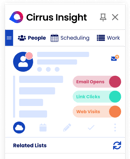
The practical takeaway: judge templates by replies and clicks, the signals that reflect real interest. Buyer Signals tracks opens, link clicks, and replies together, so you can lean on the reliable signals and treat the open number as a loose hint at best.
Frequently Asked Questions
How Many Follow-Up Emails Should I Send?
Aim for a sequence of 4 to 7 touches. In Instantly’s 2026 benchmark, 58 percent of replies came from the first email and 42 percent came from the follow-ups, so stopping after one email leaves almost half your replies on the table. Space touches 3 to 4 days apart and give each one a new reason to reply.
What Is the Best Time to Send a Sales Email?
Mid-week mornings perform best. Launch new sequences Monday, send follow-ups Wednesday when engagement peaks, and expect Friday to bring out-of-office replies. Belkins found morning sends between 8 a.m. and noon drove the highest reply rates in 2025. Treat these as a starting point and test against your own audience.
How Long Should a Sales Email Be?
Short. Instantly’s data shows the best-performing cold emails run under 80 words. A tight email with one clear ask respects the reader’s time and gets to the point before they lose interest. Save the detail for the reply.
What Is a Good Reply Rate for a Sales Email?
For cold outreach, the 2026 average is about 3.43 percent. Anything above 5 percent puts you in the top quartile, and above 10 percent is elite territory. Warm and inbound emails run much higher because trust is already partly built.
How Do I Personalize Sales Email Templates at Scale?
Segment first, then personalize the one detail that matters most to each segment, and use merge fields for the rest. Cirrus Insight’s Email Blast pulls Salesforce data into templates so a personalized send does not turn into a manual, one-by-one job.
Do Email Open Rates Still Matter for Sales?
Less than they used to. Apple Mail Privacy Protection inflates open data by pre-loading tracking pixels, so a high open rate can be an illusion. Reply rate and click rate are the honest measures of whether your sales emails are landing.
Turn Better Emails Into More Meetings
Templates get you consistent messages. The next step is knowing which ones actually land and getting the reply into your CRM without manual data entry. Cirrus Insight sends personalized emails at scale, tracks replies and clicks with Buyer Signals, and logs it all to Salesforce so your pipeline stays current. Book a demo to see how it fits your team’s workflow and close more deals with less admin.