I have spent the better part of the last year watching sales teams bolt AI onto outbound and hoping for magic. Most of the time it does not work, because the tool sits outside the CRM, the data is stale, or the reps quietly stop using it after week two.
So I went through the AI sales prospecting market the way a buyer would. I compared dozens of platforms on five things that actually decide whether a tool sticks: how much of the prospecting workflow it covers, how cleanly it integrates with a CRM like Salesforce or HubSpot, the quality of its data and its AI output, how transparent its pricing is, and how quickly a rep can adopt it. I leaned on product documentation, hands-on demos, and public user reviews where I could not test something directly.
These are the 12 that earned a spot, what each one is genuinely good at, and where each one falls short.
|
HOW THIS LIST WAS PUT TOGETHER
This roundup is published by Cirrus Insight, and Cirrus Insight is one of the 12 tools on it. I judged every tool, including our own, on the same five criteria, and every entry carries honest cons. I call out where Cirrus is the obvious fit and where another tool will serve you better. Pricing and feature details were current at the time of writing and should be confirmed on each vendor site before you buy.
|
What Is AI Sales Prospecting?
AI sales prospecting is the use of AI to find, research, prioritize, and reach the right buyers, so reps spend their time on conversations instead of manual list-building and data entry. The tools below fall into five groups.
- Salesforce-native co-pilots: Live inside your inbox and CRM and act on the data you already own: meeting prep, buyer signals, and next-step nudges. Cirrus Insight is the example here.
- Data and enrichment platforms: Start from a contact database and enrich it with firmographic, technographic, and intent data. Apollo, ZoomInfo, Persana, and Clay sit here.
- Sales engagement and sequencing: Run multichannel outreach and use AI to write and time the touches. Outreach and Lemlist are in this group.
- Predictive and intent (ABM): Score accounts and surface buying signals so teams focus on the highest-probability targets. 6sense, People.ai, and MadKudu belong here.
- Conversational and generative AI: Automate replies, follow-ups, and outbound copy. Conversica and Regie.ai fit this bucket.
How I Evaluated These Tools
- Workflow coverage: Does it help across sourcing, enrichment, engagement, and follow-up, or only one slice? A tool that fixes one step but leaves the rest manual rarely pays off.
- Integrations: Does it plug into your CRM and stack without breaking the rep's flow? Native Salesforce or HubSpot sync matters more than any single feature.
- Data and output quality: Is the contact data accurate, and does the AI produce messaging a human would actually send?
- Pricing transparency: Can you tell what you will pay and what a credit costs, or is it all "contact us"?
- Ease of adoption: Can a rep learn it in a day, or does it need weeks of setup before it earns its keep?
The Best AI Sales Prospecting Tools at a Glance
|
Tool
|
Best for
|
Standout feature
|
Starting price
|
Website
|
|
Cirrus Insight
|
Salesforce-first teams
|
AI Meeting Prep inside Salesforce
|
Free trial; feature-based (confirm)
|
Visit Cirrus Insight
|
|
Apollo.io
|
High-volume prospecting on a budget
|
250M+ contacts plus sequencer
|
Free plan; from $49/user/mo
|
Visit Apollo.io
|
|
ZoomInfo
|
Enterprise data and intent
|
Web and email intent data
|
Custom
|
Visit ZoomInfo
|
|
Persana AI
|
Automated account research
|
Multi-source AI enrichment
|
Custom (usage-based)
|
Visit Persana AI
|
|
Clay
|
Custom enrichment workflows
|
100+ providers plus Claygent
|
Free plan; from ~$167/mo
|
Visit Clay
|
|
Outreach
|
Enterprise sales engagement
|
Deal prediction plus Kaia
|
Custom
|
Visit Outreach
|
|
Lemlist
|
AI multichannel outreach
|
AI multichannel sequences
|
Free trial; from ~$55/user/mo
|
Visit Lemlist
|
|
6sense
|
Predictive ABM
|
Predictive intent scoring
|
Custom
|
Visit 6sense
|
|
People.ai (Backstory)
|
Activity capture and CRM hygiene
|
Automatic activity capture
|
Custom
|
Visit People.ai
|
|
MadKudu
|
Predictive lead scoring
|
Predictive lead scoring
|
Custom
|
Visit MadKudu
|
|
Conversica
|
Automated lead follow-up
|
AI follow-up assistant
|
Custom
|
Visit Conversica
|
|
Regie.ai
|
Generative outbound content
|
Generative outreach content
|
Custom; ~$35K/yr enterprise
|
Visit Regie.ai
|
The 12 Best AI Sales Prospecting Tools
- Cirrus Insight for Salesforce-first teams
- Apollo.io for high-volume prospecting on a budget
- ZoomInfo for enterprise data and intent
- Persana AI for automated account research
- Clay for custom enrichment workflows
- Outreach for enterprise sales engagement
- Lemlist for AI multichannel outreach
- 6sense for predictive ABM
- People.ai for activity capture and CRM hygiene
- MadKudu for predictive lead scoring
- Conversica for automated lead follow-up
- Regie.ai for generative outbound content
Best for Salesforce-First Teams: Cirrus Insight
Cirrus Insight (Web, Gmail, Outlook, Salesforce)
CATEGORY: SALESFORCE-NATIVE CO-PILOT
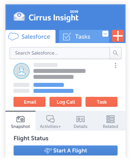
If your team lives in Salesforce, Cirrus Insight is the tool on this list built specifically for you. Where Apollo and ZoomInfo hand you a database to work through, Cirrus starts from the account and activity data you already own and turns it into pre-call research, buyer signals, and follow-up prompts inside the inbox.
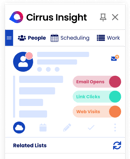
The feature I point people to first is Meeting AI, which researches the contacts and accounts on your calendar and delivers a briefing before the call so reps walk in prepared. Buyer Signals tracks opens, clicks, and replies so you follow up when engagement is highest. Next Steps AI recommends the next action, whether that is a recap, a booking, or a CRM update, and Proposal AI drafts proposals from live Salesforce data. CRM AI quietly queues up the opportunity hygiene most reps never get to, so the pipeline stays clean without manual entry.
Cirrus is honest about its lane. It is not a net-new contact database, so it is not where you build a cold list from scratch, and its deepest value depends on you running Salesforce. For a Salesforce shop that wants AI woven into the tools reps already open every day, that focus is the point.
KEY FEATURES
- Meeting AI for automated pre-call research and briefings
- Buyer Signals for real-time email opens, clicks, and replies
- Next Steps AI for next-best-action recommendations
- Proposal AI drafted from live Salesforce data
- CRM AI for one-tap Salesforce opportunity hygiene
PROS
- Native Salesforce sync with no manual logging
- AI meeting prep and follow-up in the inbox
- Coaches reps before, during, and after calls
CONS
- Deepest value requires Salesforce
- No built-in prospecting database for cold lists
- Feature-based pricing can add up as you stack modules
Cirrus Insight pricing: Free trial; feature-based pricing (public Cirrus plans list from roughly $11 to $21 per user per month).
Best for: Salesforce-first teams that want an AI prospecting assistant inside their inbox.
Best for High-Volume Prospecting on a Budget: Apollo.io
Apollo.io (Web, Chrome extension)
CATEGORY: DATA AND ENRICHMENT PLATFORM
Apollo is the workhorse for teams that want database, enrichment, and outreach in one affordable place. It pairs a contact database of more than 250 million profiles with AI sequencing, so you can go from a filtered list to a running campaign without stitching three tools together.
Its AI uses your closed-won data to surface lookalike leads, enriches and re-verifies records as people change jobs, and scores prospects against your ICP. The AI Call Assistant transcribes calls, summarizes the key moments, and generates action items that sync back to your CRM. For a lean team, that breadth at a low entry price is hard to beat.
The trade-offs are the credit system, which is easy to burn through and not always clear, and a learning curve on the fuller feature set. LinkedIn outreach is not automated, so if social selling is core to your motion you will still lean on something like Lemlist for that channel.
KEY FEATURES
- 250M+ contact database with AI lookalike sourcing
- Enrichment that re-verifies records over time
- AI-written emails and multichannel sequences
- AI Call Assistant with transcripts and action items
PROS
- Database, enrichment, and sequencing in one tool
- Low entry price with a free plan
- Integrates with Salesforce, HubSpot, and Pipedrive
CONS
- Credit usage is easy to burn and hard to predict
- Learning curve on the full feature set
- LinkedIn outreach is not automated
Apollo.io pricing: Free plan; Basic from $49/user/mo, Professional $79, Organization $119 (billed annually).
Best for: SMB and mid-market teams that want an all-in-one prospecting platform without enterprise pricing.
Best for Enterprise Data and Intent: ZoomInfo
ZoomInfo (Web, Chrome extension)
CATEGORY: DATA AND ENRICHMENT PLATFORM
ZoomInfo is the data powerhouse enterprise teams reach for when coverage and intent precision matter more than price. It combines firmographic, technographic, and intent data to identify accounts that are showing active buying signals, then keeps your CRM enriched as records change.
The intent tracking is the headline: ZoomInfo watches web and email engagement across a large data co-op to flag accounts researching your category, and its predictive analytics help reps prioritize which of those to work first. If Apollo is the affordable generalist, ZoomInfo is the deep, expensive specialist.
That depth comes at enterprise pricing and annual contracts, which puts it out of reach for many smaller teams and makes it overkill if you only need a modest contact list. Budget and procurement, not features, are usually the deciding factors here.
KEY FEATURES
- Firmographic, technographic, and intent data
- Automated CRM and contact enrichment
- Web and email intent signals across a data co-op
- Predictive analytics for account prioritization
PROS
- Deep, high-coverage B2B data
- Strong intent signals for account prioritization
- Robust enrichment that keeps the CRM current
CONS
- Enterprise pricing and annual contracts
- Overkill for small teams
- Steeper commitment than a self-serve tool
ZoomInfo pricing: Custom (annual contracts).
Best for: Mid-market and enterprise teams that depend on data precision and intent at volume.
Best for Automated Account Research: Persana AI
CATEGORY: DATA AND ENRICHMENT PLATFORM
Persana AI is for teams that want deeper account context before a rep ever reaches out. It automates lead research and enrichment at scale, pulling firmographic and technographic data, scoring and prioritizing accounts, and syncing enriched profiles straight into the CRM.
The pitch is research depth. Where a database tool tells you who to contact, Persana focuses on assembling the picture around them, so reps open with relevance instead of a generic first line. It sits comfortably alongside a sequencing tool rather than replacing one.
As a newer entrant, its integration catalog is thinner than ZoomInfo's, and usage-based pricing can be hard to forecast if your research volume swings month to month. Treat it as an enrichment layer, not an all-in-one platform.
KEY FEATURES
- Automated firmographic and technographic research
- Automatic account scoring and prioritization
- Enriched profiles synced to the CRM
PROS
- Deep automated account research
- Prioritizes accounts before outreach
- Clean CRM sync of enriched data
CONS
- Newer, less established than incumbents
- Usage-based pricing is hard to forecast
- Thinner integration catalog
Persana AI pricing: Custom, based on data usage.
Best for: Teams that want richer account insight feeding their outreach.
Best for Custom Enrichment Workflows: Clay
CATEGORY: DATA AND ENRICHMENT PLATFORM
Clay is what you use when off-the-shelf enrichment is not enough. If Apollo's all-in-one approach feels too rigid, Clay goes the other way: it pulls from more than 100 data providers and lets you build highly customized outbound workflows, waterfalling sources so you only pay for the matches you get.
Its AI research agent, Claygent, scrapes the web to answer specific research questions at scale, and its AI Formula feature lets you automate complex data tasks by describing them in plain English. For a GTM engineer building a bespoke prospecting motion, that flexibility is unmatched on this list.
The cost of that power is a real learning curve, and Clay is not a standalone CRM, so it relies on integrations for pipeline management. Its outreach is email-centric, which is why teams often pair it with a dedicated sequencer. Credit consumption scales with task complexity, though Clay shows the cost before a task runs.
KEY FEATURES
- 100+ data providers with waterfall enrichment
- Claygent AI web research at scale
- AI Formula for plain-English data automation
- Native integrations with Salesforce and HubSpot
PROS
- Unmatched enrichment flexibility
- Claygent handles deep custom research
- Transparent per-task credit costs
CONS
- Steep learning curve to build workflows
- Not a standalone CRM
- Outreach is email-centric
Clay pricing: Free plan; paid from roughly $167 to $446/mo depending on plan and credits.
Best for: Growth and RevOps teams that want to engineer custom, data-rich outbound.
Best for Enterprise Sales Engagement: Outreach
Outreach (Web, Chrome extension)
CATEGORY: SALES ENGAGEMENT PLATFORM
Outreach is the sequencing and revenue-execution platform for larger teams working high volumes of deals with long cycles. Like Apollo, it runs sequences, but it is built for the enterprise, with AI layered across sourcing, research, engagement, and forecasting.
Its AI Research Agent enriches contacts and scores leads from public and private sources, it generates personalized emails and call scripts, and its Kaia conversation intelligence transcribes meetings and flags action items. Outreach also predicts deal outcomes and recommends next-best actions, which is why revenue leaders lean on it for forecast confidence.
The reasons to hesitate are familiar for enterprise software: pricing is not publicly disclosed, and the depth of the platform brings a steep learning curve. For a small team or a simple motion, it is more than you need, and something like Lemlist will get you there faster.
KEY FEATURES
- AI Research Agent for enrichment and lead scoring
- AI-written emails and call scripts
- Kaia conversation intelligence with action items
- Deal prediction and next-best-action guidance
PROS
- AI across the full funnel
- Strong forecasting and revenue intelligence
- Next-best-action guidance on calls and email
CONS
- Pricing is not publicly disclosed
- Steep learning curve
- Overkill for small or simple teams
Outreach pricing: Custom (not publicly disclosed).
Best for: Enterprise revenue teams that want structured, ai outbound sales at scale.
Best for AI Multichannel Outreach: Lemlist
Lemlist (Web, Chrome extension)
CATEGORY: SALES ENGAGEMENT PLATFORM
Lemlist is the multichannel outreach tool I reach for when a smaller team wants AI-personalized sequences across email, LinkedIn, and phone without enterprise overhead. Where Outreach targets the enterprise, Lemlist aims at SMB and mid-market SDRs who need to run personal-feeling campaigns at scale.
Its AI Sequence Generator builds full multichannel campaigns from a short brief, and AI Variables write custom intro lines, LinkedIn icebreakers, and dynamic P.S. notes so messages read like a human wrote them. A database of more than 450 million verified B2B contacts and a built-in email warmup tool round out the prospecting side, so you can source, personalize, and protect deliverability in one place.
The honest limitations: the strongest features are gated to higher plans, credit usage is not clearly explained, and the interface takes some getting used to for newer reps. It is also not a full CRM, so it works best alongside one rather than as your system of record.
KEY FEATURES
- AI Sequence Generator for multichannel campaigns
- AI Variables for personalized intros and icebreakers
- 450M+ verified B2B contact database
- Built-in email warmup for deliverability
PROS
- AI personalization across email, LinkedIn, and phone
- Built-in warmup protects deliverability
- Fast to launch for smaller teams
CONS
- Top features gated to higher tiers
- Credit usage is not clearly explained
- Learning curve for early-stage reps
Lemlist pricing: Free trial; Email Pro from ~$55/user/mo, Multichannel from ~$87/user/mo, Enterprise custom.
Best for: SMB and mid-market teams running AI-personalized multichannel outreach.
Best for Predictive ABM: 6sense
CATEGORY: PREDICTIVE AND INTENT (ABM)
6sense is the predictive engine behind large account-based programs. It uses AI-driven intent data to identify which accounts are in-market, scores and prioritizes them, and orchestrates outbound targeting so teams spend their energy where a deal is most likely.
The strength is anticipation. 6sense surfaces buying behavior across channels, often before a prospect fills out a form, and helps sales and marketing coordinate around the same priority accounts. For enterprise ABM teams, that shared signal is the whole value.
It is built for scale, which means enterprise pricing and a setup that takes real effort to configure and interpret. Smaller teams without a dedicated ops function will find it heavy. Like MadKudu, it scores accounts, but 6sense is aimed at orchestrating full ABM programs rather than scoring inbound leads.
KEY FEATURES
- Predictive account identification and scoring
- Cross-channel intent and buyer-behavior insight
- Orchestrated outbound targeting for ABM
PROS
- Strong predictive intent data
- Aligns sales and marketing on priority accounts
- Surfaces demand before a form fill
CONS
- Enterprise pricing
- Complex to set up and interpret
- Best suited to large ABM teams
6sense pricing: Custom enterprise plans.
Best for: Enterprise sales teams running large account-based marketing programs.
Best for Activity Capture and CRM Hygiene: People.ai
CATEGORY: PREDICTIVE AND INTENT (ABM)
People.ai turns the raw activity your team generates, emails, meetings, and CRM touchpoints, into clean data and prospecting intelligence. Its AI captures activity automatically, so managers get complete visibility without reps logging anything by hand.
From that captured data, it tracks engagement across teams and channels and runs predictive analytics on pipeline health. For large orgs where CRM hygiene is a constant battle, that automatic capture is the draw: it makes the pipeline trustworthy enough to forecast on.
The considerations are that it is enterprise-focused, priced by custom quote, and takes implementation effort to roll out across a big team. It is a revenue-intelligence and hygiene layer rather than a place to build a cold list.
KEY FEATURES
- Automatic AI activity capture
- Engagement tracking across teams and channels
- Predictive analytics on pipeline health
PROS
- Automatic activity capture with no manual entry
- Clean, trustworthy CRM data
- Full visibility for managers
CONS
- Enterprise-focused
- Custom pricing only
- Implementation effort across large teams
People.ai pricing: Custom pricing.
Best for: Large teams that want automatic CRM hygiene and accurate pipeline insight.
Best for Predictive Lead Scoring: MadKudu
CATEGORY: PREDICTIVE AND INTENT (ABM)
MadKudu is the tool that keeps sales and marketing honest about which leads are worth working. It uses firmographic and behavioral data to score leads predictively and models conversion likelihood based on your past deals.
Like 6sense, MadKudu scores accounts, but its focus is qualifying inbound leads so reps chase the ones most likely to close. It syncs with Salesforce and HubSpot so those scores land where reps already work. For a RevOps team trying to align on pipeline priorities, it is a clean, focused fit.
Because it is scoring-oriented, MadKudu is not a full prospecting suite, and its models need enough historical deal data to be reliable, so very early-stage teams may see less value at first. Pricing is custom.
KEY FEATURES
- Predictive lead scoring from firmographic and behavioral data
- Conversion modeling based on past deals
- Salesforce and HubSpot sync
PROS
- Focused, accurate lead scoring
- Conversion modeling from real deal history
- Syncs scores into the CRM
CONS
- Not a full prospecting suite
- Needs historical deal data to model well
- Custom pricing
MadKudu pricing: Custom pricing.
Best for: Marketing and RevOps teams that want to qualify inbound leads intelligently.
Best for Automated Lead Follow-up: Conversica
CATEGORY: CONVERSATIONAL AND GENERATIVE AI
Conversica solves the problem every team has and few fix: leads that go cold because nobody followed up. It deploys an AI assistant that engages and qualifies leads automatically over email and chat, nurturing them in a natural back-and-forth until they are ready for a human.
The assistant is multilingual and works across channels, which makes it a strong fit for organizations drowning in inbound or event-driven volume. It keeps conversations going at a scale a human team cannot match, so no lead sits untouched.
Its scope is deliberately narrow. Conversica handles follow-up and nurture, not sourcing or enrichment, so it is a layer on top of your prospecting stack rather than the stack itself. Pricing is custom, and the assistant needs tuning to match your voice.
KEY FEATURES
- AI assistant for automated email and chat follow-up
- Conversational nurture until human handoff
- Multilingual, omnichannel support
PROS
- Automates follow-up at scale
- Natural conversational nurture
- Multilingual and omnichannel
CONS
- Narrow scope: follow-up, not sourcing
- Custom pricing
- Needs tuning to match your voice
Conversica pricing: Custom.
Best for: Organizations managing high inbound or event-driven lead volume.
Best for Generative Outbound Content: Regie.ai
CATEGORY: CONVERSATIONAL AND GENERATIVE AI
Regie.ai is the creative engine for outbound messaging. It uses generative AI to write, optimize, and personalize outreach across email, calls, and LinkedIn, with data-driven A/B testing to improve what is working.
For teams that struggle to produce consistent, high-performing copy at volume, Regie is the answer, and it integrates with Salesforce, Outreach, and Salesloft so the content flows into the engagement platform you already run. It pairs naturally with a sequencer like Outreach rather than replacing it.
It is priced for the enterprise, and it is content-focused, so it is one piece of a prospecting stack, not the whole thing. If your bottleneck is messaging rather than data or workflow, that focus is exactly what you want.
KEY FEATURES
- Generative AI for email, call, and LinkedIn sequences
- Data-driven A/B testing
- Integrations with Salesforce, Outreach, and Salesloft
PROS
- Consistent, high-performing outbound copy
- A/B testing built in
- Feeds directly into major sequencers
CONS
- Enterprise pricing
- Content-focused, not a full stack
- Best paired with an engagement platform
Regie.ai pricing: Custom. Pro is $49/mo
Best for: Outbound teams that want consistent AI-generated messaging at scale.
How to Use AI for Sales Prospecting
Buying a tool is the easy part. Here is the five-step approach I use to fold AI into a prospecting workflow without overwhelming reps.
- Define your ICP and clean your data first. AI is only as good as the data you feed it. I revisit the Ideal Customer Profile against real conversion data, use CRM and intent data to find the segments that actually convert, and scrub existing lists before syncing them to anything AI-powered.
- Choose for fit, not feature count. The tool that integrates cleanly with your CRM beats the one with the longest feature list. I look for native Salesforce or HubSpot sync, room to scale, and AI that gives reps actionable recommendations rather than another dashboard.
- Map your outreach workflow before automating. I write out every touch in the cadence, email, call, LinkedIn, and follow-up, then let AI handle timing, personalization, and testing while reps keep control of tone and strategy. Automate one or two stages first, then expand.
- Anchor everything to the CRM. The CRM is the single source of truth. I sync AI tools straight into it, use engagement data to refine targeting, and check outcomes weekly to see which AI-driven actions actually move deals. A tool like Cirrus Insight logs every email and meeting to Salesforce automatically, which closes the data-gap that sinks most rollouts.
- Review, then scale what works. AI outbound is trial and error. I watch reply and meeting rates, kill what underperforms, and expand the plays that earn their keep. Small, measured expansion beats flipping everything on at once.
Which AI Sales Prospecting Tool Should You Choose?
There is no single best AI sales prospecting tool, only the best one for your motion. If you run on Salesforce and want AI inside the inbox, Cirrus Insight is the natural home. If you need an affordable all-in-one, Apollo is hard to beat; if you need enterprise data, ZoomInfo; if you want custom enrichment, Clay. Budget, team size, CRM, and whether your bottleneck is data, workflow, or messaging should drive the call.
For Salesforce teams, the reason to start with Cirrus Insight is simple: most outbound tools stop at outreach, while Cirrus syncs every email, meeting, and activity into Salesforce and layers AI on top of the data you already own. Meeting AI preps reps in seconds, Buyer Signals flag the moment a prospect engages, Next Steps AI keeps deals moving, and CRM AI keeps the pipeline clean without manual entry.
If you want to see it work on your own Salesforce data, book a 30-minute demo and watch the full motion run from inbox to CRM.
AI Sales Prospecting FAQs
What Is AI Sales Prospecting?
AI sales prospecting is the use of AI to find, research, prioritize, and reach potential buyers who match your ideal customer profile. The tools analyze data to identify in-market accounts, automate outreach across channels, and recommend the next best action, so reps spend less time on admin and more on selling.
How Does AI Improve Sales Prospecting?
AI handles the repetitive parts, lead research, enrichment, sequencing, and follow-up, and uses behavioral and intent data to personalize outreach and time it well. The practical effect is that reps work a shorter, higher-quality list and spend their hours on conversations instead of list-building.
What Are the Best AI Sales Prospecting Tools in 2026?
It depends on your motion, but strong options include Cirrus Insight for Salesforce-native AI, Apollo for affordable all-in-one prospecting, ZoomInfo for enterprise data and intent, Clay for custom enrichment, and Lemlist for AI multichannel outreach. The full 12 are compared above.
How Do I Use AI for Sales Prospecting?
Start small. Clean your ICP and data, pick a tool that integrates natively with your CRM, and automate one stage first, usually lead scoring or follow-up, before expanding. Anchor everything to the CRM so your data stays clean and your results stay measurable.
Does AI Replace SDRs and Sales Reps?
No. AI takes over repetitive research, data entry, and scheduling so reps can focus on relationships and closing. It is a co-pilot, not a replacement, and the teams that win treat it that way.
Can Cirrus Insight Be Used for Sales Prospecting?
Yes. For Salesforce users, Cirrus Insight supports the prospecting workflow with Meeting AI for pre-call research, Buyer Signals for engagement tracking, and Next Steps AI for follow-up, and it logs every interaction to Salesforce automatically so no lead goes cold.
Related Reading


.png?width=18&height=18&name=Vector%20(5).png)