I have watched sales managers buy a $90,000 coaching platform and then coach exactly as many calls as they did before: the four a week they had time for. The tool was never the problem.
So when I sat down to rank these, I stopped asking which platform has the best AI and started asking a duller question: where does the coaching actually land, and will anyone use it? I spent about three weeks on this. I read every vendor pricing page, pulled procurement benchmarks where vendors hide their numbers, and went through the G2 and Capterra review corpora looking for the complaints that repeat. I have not run all 13 in production, and I will tell you which ones I am reporting on rather than testing.
Here are the 13 that survived.
COACH EVERY CALL, NOT THE FOUR YOU HAD TIME FOR
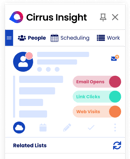
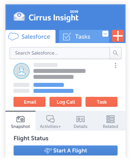
Cirrus Insight puts meeting prep, live coaching, and Salesforce follow-up in the inbox your reps already live in. Book a demo.
The 13 Best AI Sales Coaching Tools
- Cirrus Insight for salesforce teams that want coaching inside the inbox
- Gong for enterprise teams that need deep call analytics and deal visibility
- Chorus by ZoomInfo for mid-market teams inside the ZoomInfo ecosystem
- Avoma for growing teams that want coaching scorecards without enterprise pricing
- Balto for contact centers and high-volume phone teams
- Salesify for small teams that refuse to sit through a sales call to learn a price
- Hyperbound for enablement teams running structured practice programs
- Cold Call Coach for sDR teams that want practice and call grading in one tool
- Agentforce Sales Coach for salesforce customers adding AI coaching to Sales Cloud
- Mindtickle for enterprise enablement teams scaling structured coaching
- Allego for distributed teams focused on presentation and communication skills
- Highspot for teams combining coaching with a sales content strategy
- Spekit for teams that need contextual, in-app learning
What is an AI Sales Coach?
AI sales coaching uses artificial intelligence to help sales reps improve through feedback, conversation insights, and data-driven guidance. For sales leaders, the practical goal is to help teams improve sales performance without making every manager manually review more calls. Instead of relying on the handful of calls a manager has time to review, AI tools analyze every customer interaction and point at what worked and what did not.
For more detail, explore our ai sales calls guide.
The category has split into four shapes, and picking the wrong shape is the most expensive mistake buyers make here. Across sales organizations, these categories support different methodologies, from traditional training to always-on sales guidance. They do not compete with each other so much as coach at different moments.
Real-time in-call coaches. They listen live and prompt the rep mid-conversation. Coaching lands during the call, when it can still change the outcome. Cirrus Insight and Balto.
Conversation intelligence coaches. They record, transcribe, score, and surface patterns after the call. The deepest analysis in the category, and the slowest feedback loop. Gong, Chorus, Avoma, Salesify.
AI roleplay and practice simulators. Reps rehearse against an AI buyer that pushes back, then get scored. This form of sales roleplay can use AI personas to recreate a buyer, a difficult objection, or a specific sales pitch. Coaching lands before the rep ever touches a real prospect. Hyperbound, Cold Call Coach, Agentforce Sales Coach.
Readiness and enablement platforms. Coaching sits inside a wider system of training, certification, and content. Built for programs, not moments. Mindtickle, Allego, Highspot, Spekit.
How I Judged Each AI Sales Coaching Platform
Does it coach, or does it record? The distinction matters when comparing AI coaching platforms, AI sales tools, and any coaching software for sales. Plenty of tools grew a "coaching" tab on top of a call recorder. Reps see what they did wrong; they never practise doing it right. That is analysis, not coaching.
Where does the coaching land? Before the call, during it, or after it. Buyers should decide whether they need deal, call coaching, or real-time coaching before comparing feature lists. This single question sorts the category better than any feature checklist.
CRM fit. Does coaching data reach the system your forecast lives in, or does it sit in another dashboard nobody opens?
Price transparency and total cost. Published rates score higher than "contact sales". Platform fees, implementation, and per-seat add-ons count against the number on the page.
Adoption without a program owner. Even the best sales coaching system needs ownership if a company wants to scale coaching and deliver high-impact coaching consistently. If a tool only works when a full-time enablement hire drives it, that hire is part of the price.
HOW THIS LIST WAS MADE
This roundup is published by Cirrus Insight, which is one of the 13 tools reviewed below. Every platform here, including ours, is judged against the same five criteria and carries real cons.
Research ran across roughly three weeks in July 2026: vendor pricing pages and documentation, third-party procurement benchmarks where vendors do not publish rates, and the public G2 and Capterra review corpora. Not every tool was run in production, and where I am reporting rather than testing, I say so in the entry.
No vendor paid for placement or for a position. Pricing was accurate at the time of writing and this category reprices constantly, so confirm with the vendor before you budget.
The Best AI Sales Coaching Tools at a Glance
|
Tool
|
Best for
|
Standout feature
|
Starting price
|
Website
|
|
Cirrus Insight
|
Salesforce teams that want coaching inside the inbox
|
Live Meeting Coach whispers next-best questions mid-call
|
From $14/user/mo
|
Visit Cirrus Insight
|
|
Gong
|
Enterprise teams that need deep call analytics and deal visibility
|
Deal intelligence tied to forecast, not just call scores
|
Quote only, see notes
|
Visit Gong
|
|
Chorus by ZoomInfo
|
Mid-market teams inside the ZoomInfo ecosystem
|
Call transcripts enriched with ZoomInfo firmographics
|
From ~$8,000/yr (3 seats)
|
Visit Chorus by ZoomInfo
|
|
Avoma
|
Growing teams that want coaching scorecards without enterprise pricing
|
Recorder-seat model keeps viewers and collaborators free
|
Free, paid from $19/seat/mo
|
Visit Avoma
|
|
Balto
|
Contact centers and high-volume phone teams
|
Visual milestone checklists ticked off live during the call
|
Quote only, see notes
|
Visit Balto
|
|
Salesify
|
Small teams that refuse to sit through a sales call to learn a price
|
Custom playbooks that codify your methodology on the Pro tier
|
Free, paid from $39/seat/mo
|
Visit Salesify
|
|
Hyperbound
|
Enablement teams running structured practice programs
|
Turns an ICP description into an AI buyer in about two minutes
|
Free tier, then quote
|
Visit Hyperbound
|
|
Cold Call Coach
|
SDR teams that want practice and call grading in one tool
|
The same scorecard grades practice calls and real calls
|
$0.25 per practice minute
|
Visit Cold Call Coach
|
|
Agentforce Sales Coach
|
Salesforce customers adding AI coaching to Sales Cloud
|
Roleplay built from the real opportunity record and buyer persona
|
Included/quote, see notes
|
Visit Agentforce Sales Coach
|
|
Mindtickle
|
Enterprise enablement teams scaling structured coaching
|
Readiness Index measures competency, not course completion
|
Quote only, see notes
|
Visit Mindtickle
|
|
Allego
|
Distributed teams focused on presentation and communication skills
|
Live Dialog Simulator for video-based AI roleplay
|
Quote only, see notes
|
Visit Allego
|
|
Highspot
|
Teams combining coaching with a sales content strategy
|
Ties rep coaching to which content actually moves deals
|
Quote only, see notes
|
Visit Highspot
|
|
Spekit
|
Teams that need contextual, in-app learning
|
AI Sidekick surfaces guidance inside the tool the rep is already in
|
Quote, ~$12-20/user/mo
|
Visit Spekit
|
1. Best AI Sales Coach for Salesforce Teams That Want Coaching Inside the Inbox
Cirrus Insight (Web, Gmail, Outlook, Salesforce)
Coaching type: Real-time in-call coach
PROS
- Live coaching cues arrive during the call, not after it
- Coaching context and follow-ups write back to Salesforce automatically
- Published per-seat pricing starting at $14
CONS
- Most of the value evaporates if your team is not on Salesforce
- G2 and Capterra reviewers flag a dated interface and occasional sync glitches
- No permanently free plan, only a trial
I am putting our own product first on our own blog, so read this entry with that in mind. Cirrus Insight is graded against the same five criteria as everything else here, and the cons above are the ones reviewers actually write about.
Where Gong and Chorus analyze the call after it ends, Cirrus Insight tries to be useful before, during, and after. That is the whole pitch, and it is the reason a $14 seat sits in the same list as a $100,000 platform.
AI Meeting Prep pulls who you are meeting and which opportunities are open, then drops the brief in your inbox before the call. This AI meeting workflow helps reps enter sales conversations with relevant context rather than relying on generic preparation.
Live Meeting Coach listens in the background and whispers the next-best question or an objection-handling cue while the conversation is still live. Conversation Intelligence captures and organizes what was said. Next Steps AI reviews the open pipeline and recommends the follow-up. Proposal AI drafts a proposal from the Salesforce opportunity context. CRM AI quietly fixes close dates, contact roles, and opportunity fields in the background.
Cirrus Insight is not a readiness platform. There is no certification track, no course library, no Readiness Index like Mindtickle's. If your problem is a 300-rep onboarding program rather than a rep who freezes on pricing questions, this is the wrong shelf.
The second limitation is dependency. This is a Salesforce-native tool. On HubSpot or Pipedrive, Avoma or Salesify will serve you better.
Cirrus Insight pricing: Salesforce Sync ($14/user/month), Pro ($21/user/month), Expert ($49/user/month), Custom (quote). Free trial, no permanent free plan. The Cirrus Flex Program gives unrestricted feature access during evaluation.
2. Best AI Coach for Enterprise Conversation Intelligence at Scale
Gong (Web, iOS, Android)
Coaching type: Conversation intelligence coach
PROS
- The deepest call analytics and cross-team benchmarking in the category
- Strong transcription accuracy, including technical vocabulary
- Deal intelligence connects conversation signals to the forecast
CONS
- A mandatory annual platform fee sits on top of every seat
- Annual prepay only, with no monthly billing option
- The fixed platform fee wrecks unit economics for teams under 50 seats
- Gong is the default answer when someone asks which conversation intelligence platform is best, and for enterprise teams that answer holds up. It is also the most expensive way to arrive at it.
The platform records, transcribes, and analyzes customer interactions, then benchmarks each rep against the rest of the team. Managers stop guessing which behaviors correlate with closed-won and start reading it off a dashboard. That makes Gong useful for analyzing sales patterns and generating coaching insights across large teams. Gong Engage and Gong Forecast extend that into sequencing and pipeline, priced as separate modules.
Two things matter more than the feature list. First, Gong looks backwards. It tells you what happened on the call. It does not sit on the call whispering, the way Cirrus Insight's Live Meeting Coach or Balto's prompts do. Second, the pricing model is a wall. Gong does not publish rates. Third-party contract data puts per-seat licensing around $1,200 to $1,600 per user per year after volume discounts, with a platform fee of $5,000 to $50,000 per year on top and implementation running $7,500 to $65,000 in year one.
For a 30-seat team, third-party benchmarks land between $50,000 and $100,000 per year. That is defensible if you have a dedicated program owner driving adoption. Without one, Gong becomes very expensive call storage, and reviewers say so repeatedly.
Gong pricing: No public pricing. Third-party contract data reports roughly $1,200 to $1,600 per user per year plus a $5,000 to $50,000 annual platform fee, with implementation from $7,500 to $65,000. Annual prepay only.
3. Best AI Coach for Teams Already Paying for ZoomInfo
Chorus by ZoomInfo (Web, iOS, Android)
Coaching type: Conversation intelligence coach
PROS
- Call data arrives enriched with ZoomInfo contact and company records
- Roughly 20 to 30 percent cheaper than Gong at equivalent seat counts
- Mature coaching scorecards and org-wide call search
CONS
- Increasingly sold inside the ZoomInfo bundle rather than standalone
- Reviewers report feature development slowed after the acquisition
- Two-year contracts are the norm, with 50 to 100 percent early-termination penalties
Chorus does most of what Gong does for meaningfully less money, and it has one thing Gong cannot replicate: the ZoomInfo data layer sitting underneath every transcript.
That matters more than it sounds. A Gong transcript tells you what the buyer said. For complex sales, that post-call context can still improve the wider sales process. A Chorus transcript tells you what the buyer said plus who they are, how big their company is, and what their org chart looks like. If you already pay for ZoomInfo, that enrichment is free upside.
If you do not already pay for ZoomInfo, the math changes fast. Third-party reporting puts the ZoomInfo data subscription that makes Chorus differentiated at $15,000 to $40,000 per year on its own. Buying Chorus then means buying ZoomInfo to unlock the reason you bought Chorus.
The other caution is momentum. ZoomInfo acquired Chorus in 2021 for $575 million, and multiple review corpora since then describe a platform that feels less cutting-edge than it did pre-acquisition. It is still a good product, carrying 4.5 out of 5 across roughly 2,988 G2 reviews. It is no longer the product setting the pace.
The commercial experience is the part reviewers complain about most, and it is worth knowing before you take the meeting. Pricing is quoted, not published. ZoomInfo's team will push the bundle. Two-year terms are standard and breaking one early typically costs 50 to 100 percent of the remaining contract value. Teams of 20-plus can usually negotiate 10 to 20 percent off list, so do not accept the first number.
If you are already a ZoomInfo shop, Chorus is the obvious pick and the enrichment is genuinely differentiated. If you are not, Avoma does the coaching part for a tenth of the money and Gong does the analysis part better.
Chorus by ZoomInfo pricing: No public pricing. Third-party benchmarks report roughly $8,000 per year for a 3-seat base package, plus about $1,200 per year per additional seat. A 10-seat deployment benchmarks near $16,400 per year.
4. Best AI Sales Coaching Software for Growing Teams on a Real Budget
Avoma (Web, Salesforce, HubSpot, Zoho, Pipedrive, Copper)
Coaching type: Conversation intelligence coach
PROS
- A genuinely usable free tier for basic recording and AI notes
- Only recorder seats are billed, so managers can review calls for free
- Coaching scorecards at a fraction of Gong or Chorus pricing
CONS
- Coaching sits behind paid add-ons, not the base plan
- Add-ons are billed per seat, so cost scales linearly with headcount
- Reviewers report weaker analytics depth and trouble on noisy calls
- Every competitor roundup I benchmarked for this piece includes Avoma. Ours did not, which was a gap worth closing.
Avoma occupies the space between Gong's enterprise contract and a plain meeting recorder. It records, transcribes across 70-plus languages, summarizes, scores the conversation, and syncs to Salesforce, HubSpot, Zoho, Pipedrive, or Copper. For a 15-person team that cannot justify a platform fee, that combination is hard to beat.
The recorder-seat model is the quiet differentiator. Viewers and collaborators cost nothing. A sales manager who only reviews calls does not consume a license, which is the opposite of how most of this category prices.
Read the pricing page carefully, though. The base plan buys meeting intelligence. Coaching, scorecards, and talk-pattern insights live in a separate Conversation Intelligence add-on, and that add-on is charged per recorder seat rather than per team. A ten-seat team adding it pays for ten. Third-party trackers also report Avoma repricing its tiers upward through 2026, so confirm the live numbers before you budget.
Compared with Salesify, Avoma has broader CRM coverage and no hour caps. Compared with Gong, it has less analytical depth and no platform fee, which for most teams under 50 seats is the trade that matters.
The limitation reviewers keep raising is analytical ceiling. Avoma summarizes and scores well. It does not benchmark a rep against the org the way Gong does, and transcription quality drops on noisy calls. If your coaching program depends on fine-grained talk-pattern analysis across 200 reps, this is not the tool. If it depends on a manager actually watching the calls, the free viewer seats are worth more than the analytics you are giving up.
Avoma pricing: Basic (free, limited meetings), Startup ($19/seat/month annual), Organization ($29/seat/month annual), Enterprise ($39/seat/month annual). Conversation Intelligence add-on from $29/seat/month annual. Bundling add-ons earns 10 to 15 percent off.
5. Best Real-Time Sales Coaching AI for High-Volume Phone Teams
Balto (Web, integrates with existing phone systems)
Coaching type: Real-time in-call coach
PROS
- Prompts appear visually mid-call, not in a post-call report
- AI call scoring grades every call rather than the few a manager reviews through AI scorecards that standardize review criteria.
- Built-in PCI, PHI, and PII scrubbing for regulated environments
CONS
- Built for contact centers, not long-cycle multi-stakeholder B2B deals
- Reviewers report accuracy misfires and prompts that distract mid-call
- No published pricing, and the ROI rarely works under 20 agents
Balto pioneered the real-time guidance category in 2017, and it is the other obvious omission from our original list. It is one of the clearer examples of AI-powered sales guidance designed for live calls. If real-time coaching is the thing you actually want, Balto and Cirrus Insight are the two names that belong in the conversation.
The mechanic is simple and effective. Balto listens to both sides of the call, watches for conversational milestones, and visually ticks them off a checklist as the rep hits them. When the rep misses one, a prompt appears with the thing to say. Managers get alerted to coaching moments while the call is still happening.
It works. It also has a real failure mode, and the review corpus is blunt about it. Across G2 reviews, the recurring complaints cluster on accuracy: misattributed filler words, prompts triggering on things the agent did not say, and pop-ups that vanish before they can be read. When a tool's entire value is being right in real time, being wrong in real time is not a minor bug.
The bigger fit question is your sales motion. Balto is built for insurance, healthcare, finance, and support contact centers running scripted, high-volume calls. If your reps run 45-minute discovery calls with five stakeholders, Gong or Cirrus Insight are the better shape.
Balto pricing: No published pricing. Third-party estimates put entry around $100 per agent per month, quoted per deployment. Balto reports 575-plus G2 reviews at 4.8 out of 5.
6. Best AI Sales Coach Tools for SMB Teams That Want a Published Price
Salesify (Web, Salesforce, HubSpot, Pipedrive)
Coaching type: Conversation intelligence coach
PROS
- Free tier with 5 recorded hours per month, no credit card
- Published per-seat tiers on a public pricing page
- Custom playbooks let managers encode their own specific sales methodology.
CONS
- Hour caps bite quickly at real SDR call volume
- Very small review base, so the ratings signal is thin
- Easy to confuse with unrelated products with similar names
Our previous version listed Salesify as custom pricing. That was wrong. Salesify publishes its tiers, which in this category is close to a differentiator on its own.
The workflow is unglamorous and complete: record the call, transcribe it, score the conversation, deliver coaching, generate the follow-up email. For B2B sales teams, that creates a more complete coaching loop around each interaction. It integrates with HubSpot, Salesforce, and Pipedrive. Pro unlocks custom playbooks so a manager can codify how their team is supposed to sell rather than accepting a generic scorecard.
The constraint you need to model before buying is hours, not seats. Starter caps at 20 recorded hours per month and Pro at 40. A five-person team running ten calls a day at fifteen minutes each burns roughly 55 hours a month. That blows through Pro. Do the arithmetic against your actual call volume, not your headcount.
The other caveat is evidence. Salesify holds a strong G2 rating on a very small number of reviews. Treat that as directionally encouraging rather than statistically meaningful, and lean on the free tier before committing.
There is also a naming problem worth flagging, because it will waste an hour of your evaluation. The G2 listing under "Salesify" describes a B2B demand-generation agency, and Capterra searches surface Salsify, an unrelated product information management tool. The platform you want is Salesify.ai.
Where it sits against the rest of this list is straightforward. Salesify does what Gong does, badly enough to cost a fraction of the price and well enough for a team of eight. If you outgrow the hour caps, Avoma is the next rung up and has no caps at all.
Salesify pricing: Free (5 hours/month), Starter ($39/seat/month, 20 hours, up to 5 members), Pro ($79/seat/month, 40 hours, custom playbooks, up to 15 members), Enterprise (quote, unlimited hours).
7. Best AI Sales Coaching Platform for Roleplay Before Live Calls
Hyperbound (Web, Salesforce, HubSpot)
Coaching type: AI roleplay and practice simulator
PROS
- Builds a talking AI buyer from an ICP description in roughly two minutes
- Simulated autodialer lets reps drill cold calls at volume
- Free tier includes nine prebuilt bots with unlimited call time
CONS
- No public pricing, and the real product requires a sales-led evaluation
- Roleplay only, with no guidance on live customer calls
- Adoption falls off unless a manager actively drives the practice cadence
Our previous version listed Hyperbound at roughly $40 per user per month. I could not find that number on any Hyperbound plan, so I have removed it. Hyperbound runs a free tier and quotes everything else.
What it does is the cleanest version of AI roleplay on the market. Describe your ideal customer profile, and Hyperbound builds an AI buyer who pushes back, raises objections, and refuses to accept a weak answer. Reps drill cold, warm, and discovery calls against it, then get scored. The simulated autodialer turns that into volume practice rather than a single rehearsal.
Klaviyo's enablement team reported a 42 percent increase in new-hire productivity per rep year over year after rolling it out to a 1,000-plus rep organization, which is a vendor case study rather than independent research, but it is at least a named company with a named person attached.
Hyperbound only helps before the call. When a rep is live with a real buyer, it is not there, which is exactly the gap Balto and Cirrus Insight fill. And like every standalone practice tool, usage decays the moment nobody is checking. Cold Call Coach solves the second problem differently, by charging per minute so unused capacity costs nothing.
Hyperbound pricing: Free tier (9 prebuilt bots, unlimited call time, full transcripts). Custom bots, custom scorecards, integrations, and real-call scoring are quote-only. Third-party reports put enterprise entry near $15,000 per year.
8. Best AI Coaching Tool for Pay-As-You-Go SDR Practice
Cold Call Coach (Web, Android, iOS)
Coaching type: AI roleplay and practice simulator
PROS
- One scorecard grades both practice sessions and real calls
- $0.25 per practice minute with no seat licenses to leave unused
- API access grades thousands of real calls without manual review
CONS
- Narrow focus on calls, not complex multi-stakeholder enterprise deals
- Usage-based billing makes monthly spend hard to forecast
- Very small review footprint compared with the enablement incumbents
Cold Call Coach is the smallest tool on this list and it solves a problem the big ones create. Enablement platforms sell seats. Seats go unused. Cold Call Coach sells minutes, so the only thing you pay for is practice that actually happened.
The closed loop is the real idea. It shows how coaching and sales activity can be measured against the same scorecard. Reps practise in the browser against an AI prospect that raises genuine objections and does not let a weak answer slide. Then the identical scorecard grades their real calls. Consistent AI feedback helps coach sales reps against the same expectations in practice and production. Training and performance get measured on the same ruler, which is a thing almost nobody in this category does.
For managers, the API is the underrated feature. You can grade thousands of real calls automatically instead of listening to a sample and hoping it generalizes.
Reps practise cold calls, discovery, product demos, renewal conversations, and voicemails, each with multiple scenarios. The structure is useful when sales reps improve through repeated practice rather than one-off review. Signing up takes a name, an email, and a company, with no password and 30 free minutes attached. Recordings are never used to train models, which is a question worth asking every vendor on this list and one most of them answer less clearly.
It is narrow, and the vendor is candid about that. If your deals involve five stakeholders and a nine-month cycle, this will not model them. Set per-rep usage caps early, because a usage-based invoice is only predictable if you make it predictable.
Against Hyperbound, the trade is depth for economics. Hyperbound builds richer custom personas and costs five figures a year. Cold Call Coach costs whatever your reps practise, which for a team that practises inconsistently is closer to honest.
Cold Call Coach pricing: $0.25 per practice minute and $2.00 per call insight report, billed monthly in arrears. 30 free minutes, no credit card. Volume rates on request. Per-rep and team-wide usage caps are configurable.
9. Best AI-Powered Sales Coaching for Sales Cloud Shops Standardizing on Salesforce AI
Agentforce Sales Coach (Salesforce (Sales Cloud, Agentforce))
Coaching type: AI roleplay and practice simulator
PROS
- Roleplay scenarios are generated from the live opportunity and persona records
- No call data leaves Salesforce, which matters in regulated orgs
- Managers can compare win rates on deals with and without coaching
CONS
- Requires Agentforce plus real configuration work by an admin
- Coaching quality is capped by your CRM data quality
- Agentforce pricing has shifted, including a move toward pay-per-resolution
Our previous version listed this as Salesforce Einstein. That branding is retired. In 2026 the coaching product is Agentforce Sales Coach, and the call-analysis layer beneath it is Einstein Conversation Insights.
The distinction matters because the two do different jobs. Together, they show how AI agents can support both conversation analysis and roleplay. Einstein Conversation Insights records and analyzes voice and video calls, surfacing competitor mentions, pricing discussions, and next steps. It is included in Sales Cloud editions. Agentforce Sales Coach is the roleplay agent that sits on top, using retrieval over Salesforce records to simulate a specific buyer at a specific deal stage.
That is the genuinely interesting part. Most roleplay tools simulate a generic persona. Agentforce Sales Coach reads the opportunity record, prior correspondence, and buyer persona documents, then plays that buyer through a pricing negotiation. Managers track coaching sessions and compare win rates on coached versus uncoached deals. That gives sales representatives a clearer connection between practice and outcomes.
One more thing worth knowing: Agentforce pricing has moved. Salesforce introduced pay-per-resolution pricing in 2026, which changes the budgeting model from seats to consumption and makes a pilot harder to scope than it used to be.
It needs Agentforce, which needs configuration, permissions, topics, and actions set up by someone who knows what they are doing. And it reads your CRM, so if your opportunity records are stale, the coach rehearses a fiction. Hyperbound will get you practising faster. This will get you practising more accurately, assuming the data is clean.
Agentforce Sales Coach pricing: Conversation Intelligence is included in Sales Cloud editions. Agentforce for Sales is priced separately by quote, and Salesforce has introduced pay-per-resolution pricing for Agentforce. No flat published seat rate for the coaching agent.
10. Best AI Coaching Software for Enterprise Readiness Programs
Mindtickle (Web, iOS, Android, Salesforce)
Coaching type: Readiness and enablement platform
PROS
- Readiness Index measures whether reps can sell, not whether they finished a course
- One of the strongest AI roleplay implementations in the enablement category
- 4.7 out of 5 on G2 across roughly 2,223 reviews
CONS
- Priced and built for organizations with 200-plus reps
- Six to eight week implementation before anyone is coached
- Genuinely overkill below about 100 reps
Mindtickle is the platform you buy when coaching is a program with headcount attached, not a feature you switch on.
It bundles training, certification, coaching, conversation intelligence, content, and roleplay into one system. The Readiness Index is what separates it from an LMS: it scores whether a rep can actually run the motion, rather than whether they watched the video and passed the quiz. Analytics tie learning activity to field behavior and then to performance, which is the loop most enablement tools promise and few close.
Mindtickle's own State of Revenue Enablement 2025 report found in its sales enablement report that that sellers who act on AI feedback and retry their roleplay submissions raise their average score by 10 percent. That is vendor research, so weigh it accordingly, but the mechanism is at least plausible: practice plus feedback plus retry beats practice alone.
Mindtickle also runs conversation intelligence and content inside the same platform, so it can replace three vendors rather than sit alongside them. That consolidation argument is the one enablement leaders actually use in the business case, and it is a fair one.
The gating factor is cost and time. Vendr procurement data across 34 tracked deals puts the average annual Mindtickle contract near $92,000, with market per-user comparables in the $30 to $50 per user per month range. Add six to eight weeks of setup. If you have 40 reps, Allego or Avoma will get you to value faster and cheaper.
Mindtickle pricing: Quote only. Vendr procurement data reports an average annual contract near $92,000 across 34 tracked deals, with per-user comparables around $30 to $50 per user per month. Implementation is reported at $3,000 to $25,000.
11. Best AI Coach for Video Practice on Distributed Teams
Allego (Web, iOS, Android)
Coaching type: Readiness and enablement platform
PROS
- Live Dialog Simulator runs video roleplay with instant AI feedback
- Conversation intelligence and coaching live in the same platform
- Mobile-first, which suits field teams and reps across time zones
CONS
- Many modules means slow configuration and heavy reliance on your CSM
- Reviewers flag a steep learning curve and thin video editing
- Contact-us pricing with implementation reported from $5,000 to $50,000-plus
Allego is the answer when your reps are never in the same room. Where Mindtickle assumes an enablement function and Highspot assumes a content library, Allego assumes a rep on a laptop in a different time zone at 9pm.
The platform splits into Allego Learning, Allego Modern Content, and Allego Digital Rooms. Learning is where the coaching lives: video practice, the Live Dialog Simulator for AI roleplay, and automated scoring. Reps record a pitch, the AI scores it, and a manager leaves feedback asynchronously. This is one way to leverage AI for structured practice across distributed teams. Built-in conversation intelligence then connects that practice to what actually happened on real calls. The combination can support improving sales execution when managers follow through on the findings.
Allego 9, the AI-powered version of the platform with AI Deal Alerts and AI Role Play, reached global availability in June 2026. Allego was also named a Leader in Gartner's first Magic Quadrant for Revenue Enablement Platforms.
Digital Rooms round it out with branded buyer spaces where AI flags engagement signals and recommends the follow-up, which puts Allego in the same conversation as Highspot on content, at a lower price point.
The recurring complaint across 673 G2 reviews is breadth as burden. Twenty-two reviewers flag a steep learning curve. Fifteen call out missing features like basic video editing. Lean teams end up leaning on their CSM to configure pages and keep content organized, which slows time to value. If you want video practice without the suite, PitchMonster and Second Nature are narrower and faster.
Allego pricing: Quote only, priced per user per month across four plans. Third-party implementation estimates range from $5,000 to $50,000-plus depending on customization and content migration.
12. Best Sales Coaching Software Tied to Content Usage
Highspot (Web, iOS, Android, Salesforce)
Coaching type: Readiness and enablement platform
PROS
- Connects coaching to which content is actually influencing deals
- Deploys in roughly two to four weeks, fast for the enterprise tier
- Best-in-class content management and analytics at scale
CONS
- Merged with Seismic in February 2026, leaving roadmap questions open
- Vendr data puts the average annual contract near $91,460
- Mid-market buyers frequently use only 30 to 40 percent of the platform
Highspot belongs on this list, but the reason to buy it is not coaching. It is coaching plus content, and if you only want the first half you will overpay. That distinction matters when evaluating a broad sales coaching platform against a narrower point solution.
The platform's real strength is knowing which assets reps use, which ones buyers engage with, and which ones correlate with closed-won. Coaching then hangs off that data. A manager is not coaching in the abstract, they are coaching a rep who keeps sending the wrong deck to the wrong stage.
Two things changed the calculus in 2026, and neither is a feature. Highspot merged with Seismic in February 2026 under Permira, which puts real uncertainty over pricing stability and roadmap continuity through the integration. Multiple procurement advisors are now telling buyers to avoid signing new multi-year contracts until the post-integration roadmap is clear.
Highspot deploys in roughly two to four weeks, which is genuinely fast for a platform at this tier and half of Seismic's six to eight. If you are going to buy enterprise enablement, being live inside a month matters.
The second is size. Vendr procurement data puts the average annual Highspot contract at $91,460, with implementation from $15,000 to $45,000 and content migration adding $8,000 to $25,000. A 60-rep team paying $91,000 is spending $1,500 per rep per year on a platform designed for orgs with dedicated enablement headcount. Below roughly 100 reps, Spekit or Allego is the more honest fit.
Highspot pricing: Quote only. Vendr procurement data reports an average annual contract of $91,460. Implementation runs $15,000 to $45,000, with content migration adding $8,000 to $25,000.
13. Best AI Coaching Platform for In-App, Just-in-time Enablement
Spekit (Web, Chrome, Salesforce, Gmail, Outlook, Slack)
Coaching type: Readiness and enablement platform
PROS
- Guidance appears inside the tools reps already have open, with no context switching
- Lowest total cost of the enablement platforms on this list
- 4.7 out of 5 on G2 across roughly 278 verified reviews
CONS
- Not a call coach, with no conversation intelligence or roleplay
- Value depends entirely on someone maintaining the content
- Narrower scope than a full enablement suite
Spekit is the odd one out here and I kept it deliberately. It is not an AI sales coach in the sense that Balto or Hyperbound are. It never listens to a call. What it does is make the answer appear at the moment the rep needs it.
The mechanic is no-code embedded guidance. A rep is in Salesforce, unsure which stage definition applies, and the definition surfaces right there. AI Sidekick extends that into personalized deal guidance. Branded deal rooms with engagement tracking round it out.
That is a real coaching gap that call analysis does not touch. Gong can tell you a rep fumbled the security question. Spekit puts the security answer in front of them before they fumble it. The two are complements, not substitutes, which is why the entry earns its place rather than competing for the same slot as Chorus.
The economics are the other argument. Vendr data puts Spekit's median annual cost at $15,145 across 32 tracked deals, with per-user comparables around $12 to $20 per user per month. Against Highspot's $91,460 average, a mid-market team can afford to be wrong about Spekit.
The honest risk is decay. Embedded guidance is only as good as the person maintaining it. Six months of neglect and your reps are reading stale answers with total confidence.
Spekit pricing: Quote only. Vendr procurement data reports a median annual cost of $15,145 across 32 tracked deals, with per-user comparables around $12 to $20 per user per month.
AI Sales Coaching Tools That Almost Made The List
These eight kept surfacing while I was benchmarking the category. Each is a real option; each lost its slot to something more distinct.
- Revenue.io: Real-time in-call coaching and methodology scoring built natively on Salesforce.
- Salesloft: Coaching wired into the sequencing and pipeline the platform already runs.
- Clari Copilot: Real-time battlecards and monologue alerts tied to revenue forecasting.
- Jiminny: Conversation intelligence aimed squarely at making managers better coaches.
- Second Nature: Avatar-based pitch rehearsal, strong on presentation, weaker on discovery.
- Nooks: Coaching built into the dialer, with roleplay bots trained on your team's real calls.
- Whatfix Mirror: Enterprise simulation training paired with in-app performance support.
- Retorio: Behavioral scoring across verbal content, vocal tone, and visual presence.
Which AI sales coach solves your actual problem?
|
The problem you have
|
What to buy
|
Why
|
|
Reps freeze on objections while the call is live
|
Real-time in-call coach
|
Cirrus Insight or Balto. Post-call analysis cannot save a call that already ended.
|
|
Managers only review a handful of calls a week
|
Conversation intelligence coach
|
Gong, Chorus, or Avoma score every call, so coaching stops depending on who had time.
|
|
New hires are burning real pipeline while they learn
|
Roleplay simulator
|
Hyperbound or Cold Call Coach let reps fail against an AI buyer instead of a real one.
|
|
Coaching happens but nothing changes
|
Readiness platform
|
Mindtickle ties practice to certification and measures competency, not attendance.
|
|
Reps cannot find the answer mid-deal
|
In-app enablement
|
Spekit surfaces it inside the tool they are already in.
|
|
Coaching data never reaches the forecast
|
CRM-native coaching
|
Cirrus Insight or Agentforce Sales Coach write back to Salesforce without a sync layer.
|
So Which AI Sales Coaching Platform Should You Buy?
There is no best AI sales coach, and anyone who tells you otherwise is selling one. Gong is the deepest and the most expensive. Balto is the sharpest in real time and the wrong shape for complex deals. Hyperbound is the best practice environment and useless once the call starts. Spekit is the cheapest and does not listen to calls at all.
Three things decide it. Where you want the coaching to land, because that sorts the category faster than any feature list. Which CRM your forecast lives in, because coaching that never reaches it is a dashboard nobody opens. And whether you have someone whose job is to drive adoption, because every platform here fails without one, and the expensive ones fail loudly.
If you are a Salesforce team and the answer to the first question is "during the call", that is the gap Cirrus Insight was built for. It unites pre-call intelligence, live coaching, and post-call automation into one continuous workflow, so coaching stops being something that happens after the call and starts being something that helps during it. Pricing starts at $14 per user per month, and the Flex Program lets you run the whole thing before you commit.
AI sales coaching FAQs
1. What is AI sales coaching?
AI sales coaching uses artificial intelligence to analyze conversations, emails, and activity data so sales teams perform better. It identifies what top reps do differently, delivers personalized coaching to everyone rather than the few calls a manager has time to review, and helps reps improve communication and consistency across the pipeline.
2. How does an AI sales coach work?
An AI sales coach listens to calls, emails, and meetings, then identifies patterns in behavior, tone, and response timing. Some tools deliver that feedback after the call. Others, like Cirrus Insight's Live Meeting Coach and Balto's real-time prompts, surface the next-best question while the conversation is still live. Roleplay tools such as Hyperbound and Agentforce Sales Coach flip the timing entirely and coach before the call happens.
3. What are the best AI sales coaching platforms in 2026?
It depends on where you want the coaching to land. For real-time in-call guidance, Cirrus Insight and Balto lead. For conversation intelligence after the call, Gong is the deepest and Avoma the best value. For roleplay before the call, Hyperbound and Cold Call Coach. For enterprise readiness programs, Mindtickle. The 13 platforms above cover every one of those cases.
4. What are the benefits of AI sales coaching software?
Traditional coaching covers only the calls a manager has time to review. AI coaching covers all of them, applies the same criteria to every rep, and frees managers to spend their time on the conversations that matter rather than on triage. It also shortens ramp, because a new hire gets feedback on their tenth call instead of waiting for a quarterly review.
5. Can AI sales coaching integrate with Salesforce or other CRMs?
Most platforms integrate with Salesforce and HubSpot. The difference is where the data lives. Gong, Chorus, and Avoma sync into your CRM through APIs while storing data in their own systems. Cirrus Insight is built natively for Salesforce, and Agentforce Sales Coach runs entirely inside it. If CRM hygiene is the pain, native beats integrated.
6. Is Cirrus Insight an AI sales coaching platform?
Yes, with a caveat worth stating on our own blog. Cirrus Insight combines AI Meeting Prep, Live Meeting Coach, Next Steps AI, and CRM automation to cover coaching before, during, and after the meeting. It is not a readiness or certification platform, and it is built for Salesforce teams. Outside Salesforce, other tools on this list will serve you better.
7. Does AI sales coaching replace human managers?
No. It automates the review, not the judgment. AI surfaces which reps need help and on what, which is the part managers never have time for. Deciding what to do about it, and having the conversation, is still a human job.
8. How much does AI sales coaching software cost?
The spread on this list runs from $0.25 per practice minute to roughly $92,000 a year. Per-seat tools start around $14 to $19 per user per month. Conversation intelligence platforms run $1,200 to $1,600 per user per year plus a platform fee. Enterprise readiness platforms are quote-only and average in the $90,000 range. Confirm every number with the vendor before you budget, because this category reprices constantly.


.png?width=18&height=18&name=Vector%20(5).png)